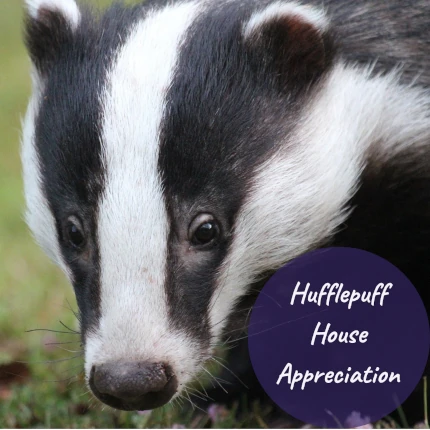
Hufflepuff House appreciation can be hard to come by. When I created the Personality Palette Survey, I really debated whether or not to include Hogwarts House. It doesn’t particularly fit among some of the other typing systems. (Although some would argue that the other systems aren’t any more legitimate than your Hogwarts House.) Still, as a Hufflepuff myself, I wanted to see if there are any correlations between other types and Hogwarts Houses. So, I included it, and now I’m showing my house some love!
How Are Hufflepuffs Different?
Hufflepuff is often seen as the forgotten house, especially in the movies, where we don’t really get to know many characters from it. But what I appreciate about Hufflepuff is that its traits have more to do with values than specific actions. Gryffindor values daring and chivalry, Ravenclaw emphasizes intelligence and learning, and Slytherin focuses on ambition and cunning. Hufflepuff, on the other hand, is all about loyalty and justice. It stands apart because it’s more inclusive—it doesn’t hold you to strict standards or require a certain skill set.
Hufflepuff students are often more modest than those from other houses. In a way, it feels like they get ignored in the stories because they aren’t as flashy or competitive. Take Cedric Diggory, for example. He’s chosen for the Triwizard Tournament, but he doesn’t become boastful or arrogant about it. Instead, he puts his head down, focuses, and works hard. He also discourages the other students from harassing Harry and shows fairness by helping Harry with the second clue after Harry had helped him earlier. That’s what Hufflepuff is all about—treating people fairly and being loyal, even when no one is looking.
Hufflepuff Inclusivity
In Order of the Phoenix, the Sorting Hat’s song gives us a different look at what each house values. Slytherin prioritizes pure bloodlines, Ravenclaw looks for the most intelligent, and Gryffindor wants brave deeds. But Hufflepuff? She says, “I’ll teach the lot and treat them just the same.” It’s about inclusivity. Hufflepuff doesn’t have a narrow set of criteria for who belongs; she just wants to make sure everyone feels accepted and treated as equals. That attitude still holds up today.
It’s easy to assume that Gryffindors would be the most likely to defend their friends and family, but Hufflepuffs shouldn’t be underestimated. Their sense of loyalty and fairness drives them to stand up for others, too. In fact, Hufflepuff has produced the fewest dark wizards of all the houses, which shows how their moral compass keeps them grounded. Newt Scamander is another great example of Hufflepuff’s loyalty and fairness. He dedicated his life to protecting magical creatures and doing what’s right, even when it wasn’t popular.
Why Does Hufflepuff Get Overlooked?
Unfortunately, Hufflepuff often gets a reputation as the “leftover” house, both in the Wizarding World and among fans. Because we mostly follow Harry’s friendships in Gryffindor, we don’t see much of Hufflepuff, making people think the house isn’t as important. And while Harry’s circle does include Luna from Ravenclaw, it’s rare to see much cross-house friendship. The lack of visibility in the films leads some fans to see Hufflepuff as goofy or less-than because there aren’t strict criteria for getting in. But that’s precisely what makes Hufflepuff great—it’s about inclusion, not exclusion.
Hufflepuff may not have the flashiest qualities or the most well-known characters, but that doesn’t make the house any less valuable. Hufflepuffs believe in loyalty, fairness, and inclusivity, which are values that strengthen the community and bring people together. And in a world that often focuses on competition, those values are more important than ever.